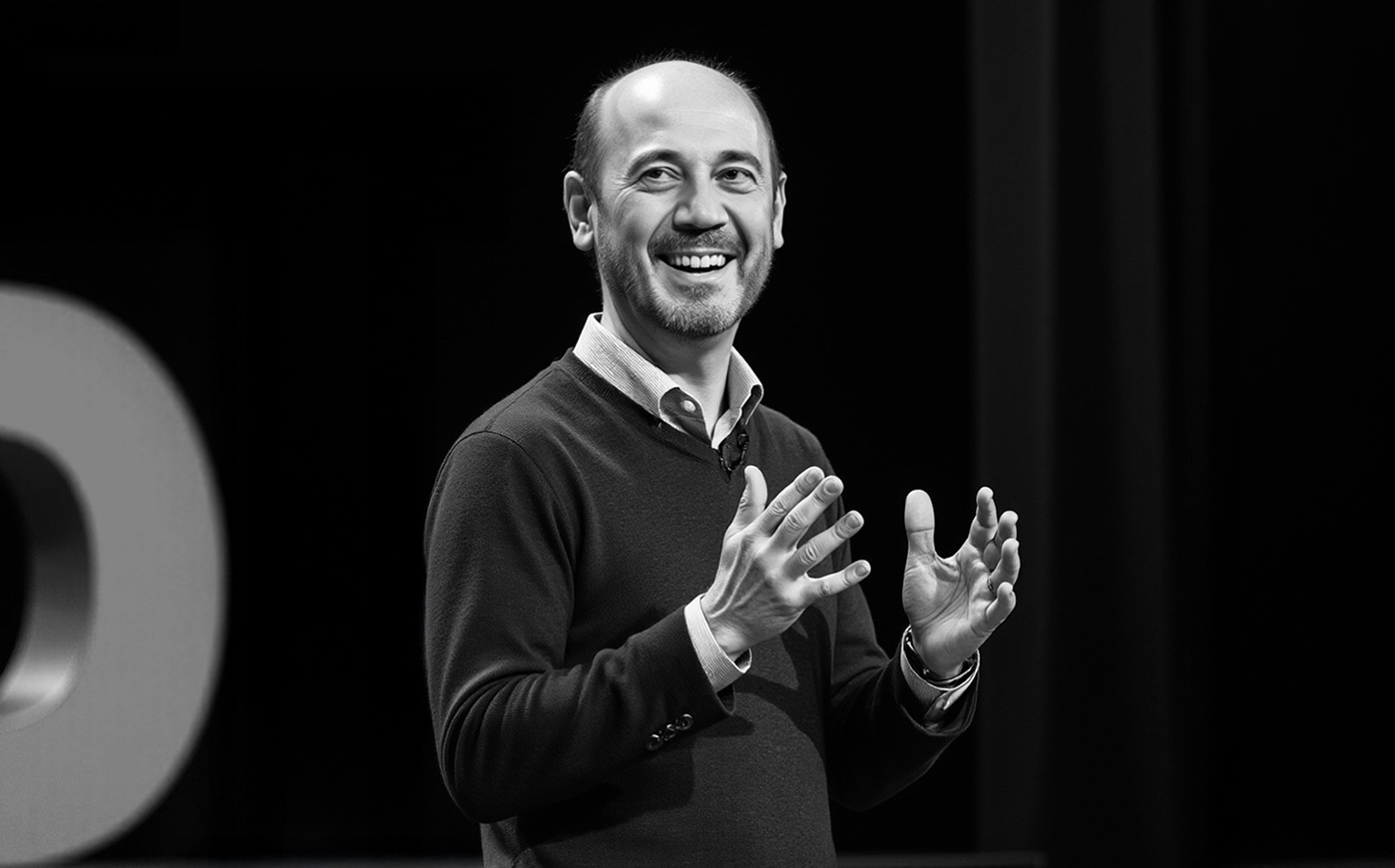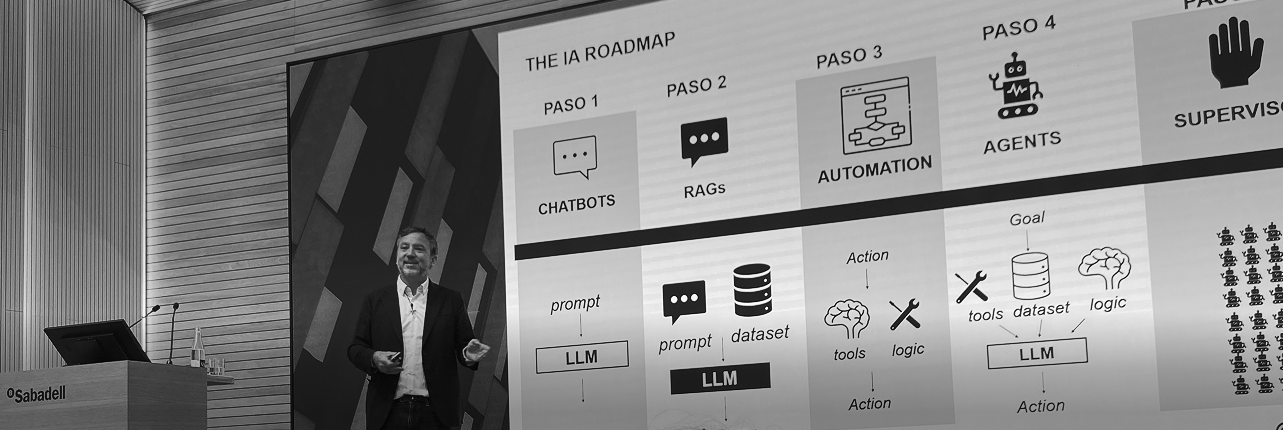
While you sleep, artificial intelligence (AI) continues to refine its capabilities. Would you pass up the chance to enhance your own simply because of fears or mental barriers? This was the central theme of AI expert Fernando de la Rosa’s talk in the DisruptIA series at Sabadell Forum, organised by the Artificial Intelligence and Data team.
According to the creator of the blog Titonet, AI should not be seen as just another tool, but as a capability that transforms the way we think and establishes new ways of reasoning through interaction with technology. This perspective encourages us to rethink AI’s role—not merely as technical support, but as a catalyst for cognitive and cultural change within organisations.
Breaking Fears to Move Forward
One of De la Rosa’s main messages was the importance of overcoming fears—such as the belief that AI could replace our jobs—and other mental barriers that slow its adoption. “It’s not about knowing how to programme, but about rethinking how we approach problems,” he emphasised. The key is understanding that AI does not replace us, but expands our capabilities, and that using it requires an open mindset centred on experimentation, dialogue and adaptable logic.
TDH: A Simple Rule for Applying AI
To make AI integration in businesses easier, De la Rosa proposed a simple yet practical rule: TDH (Tasks, Data, Tools — “herramientas” in Spanish). First, identify the tasks you want to improve; next, gather and structure the necessary data; finally, choose the most appropriate tool. Following this sequence helps avoid the common mistake of adopting technology without a clear purpose.
How AI Is Actually Being Used
De la Rosa shared the results of a study conducted with over 5,000 professionals on AI usage:
- Only 4% use it intensively and across their daily work.
- 20% have tested it on specific tasks, such as generating text or analysing data.
- The remaining 76% have not yet adopted it in any significant way, mainly due to lack of knowledge, training, or fear of change.
These findings show that the challenge is not only technological, but also cultural and educational. Technology moves fast, and both individuals and organisations need to keep pace.
Thinking Differently, but Critically
De la Rosa also warned about a key trait of current AI models: they provide answers even when they are not certain. “AI aims to satisfy the user, even if that means producing a plausible but invented response,” he explained. This makes it essential to maintain a critical mindset and to verify the information AI provides.
Conclusion: A New Way of Thinking for a New Era
In summary, Fernando de la Rosa’s talk conveyed a clear message: artificial intelligence is not just about software, but about a new way of thinking. Embracing it means learning to interact with technology and integrating new ways of reasoning into decision-making. In a constantly changing environment, developing this capability could be the difference between adapting or being left behind.