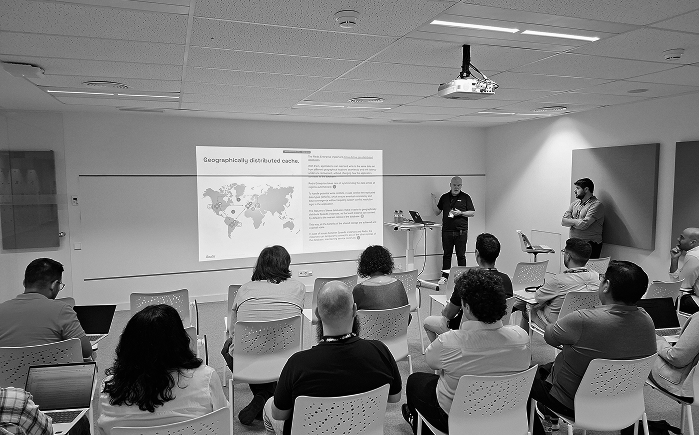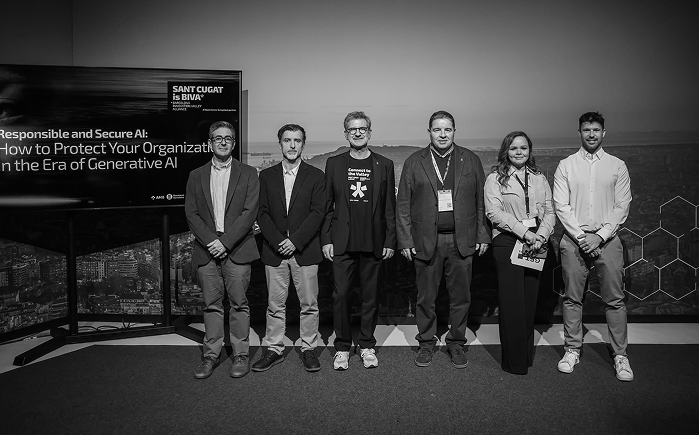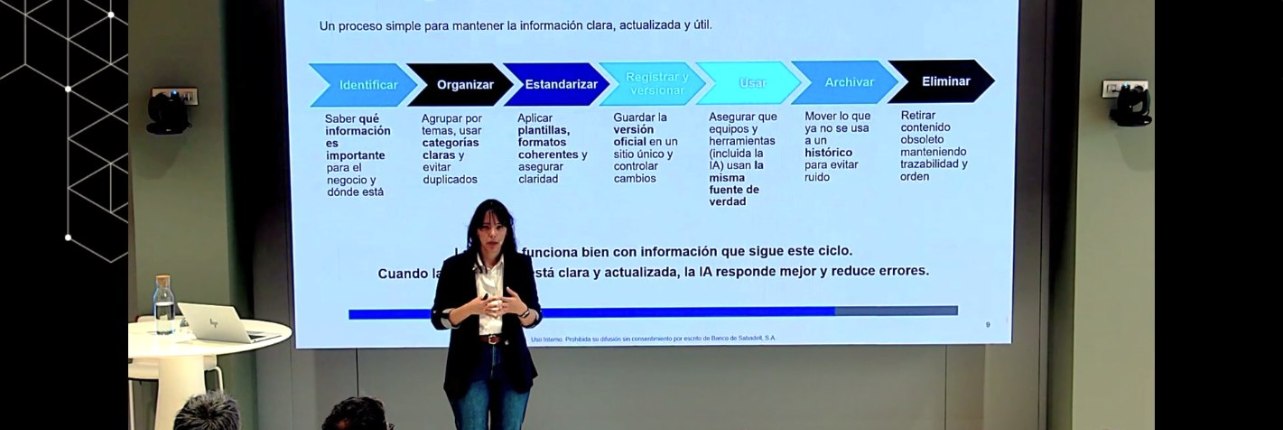
A new example of our commitment to innovation and artificial intelligence took place on February 3rd at the Hub Empresa in Valencia, where Beatriz Tapias, Data Specialist in Generative AI and AI Agents at the Bank, participated in the session “Prepare Your Business for AI: From Data to Useful Knowledge.”
The event was aimed at SMEs, freelancers, and business and tech professionals interested in applying artificial intelligence in a practical, responsible way with real impact on their companies or projects.
AI starts with organized knowledge
In a fast-changing environment, artificial intelligence only delivers sustainable value when it is supported by well-managed knowledge. One of the key messages of the session was clear: AI does not fix information disorder—it amplifies it.
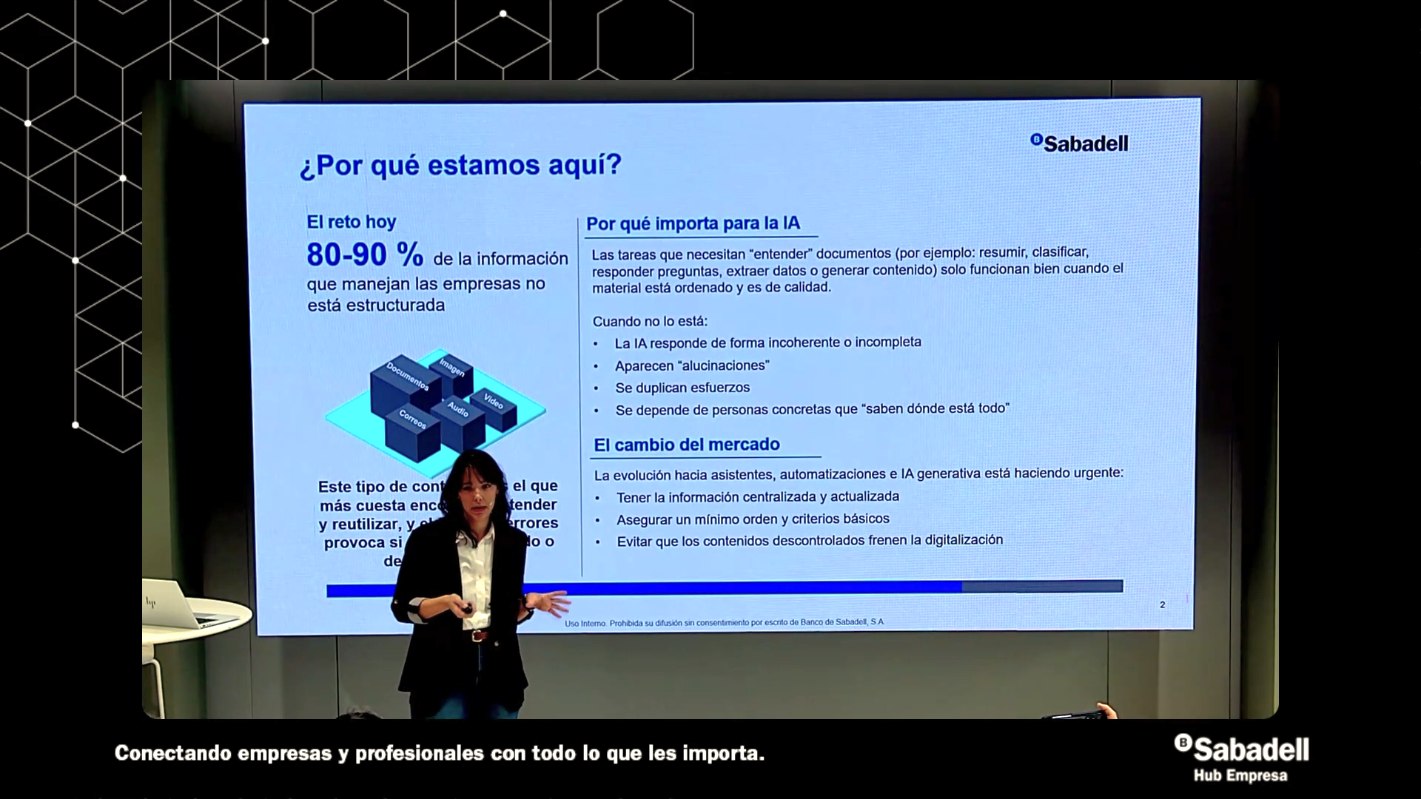
Today, 80–90% of a company’s knowledge lives in unstructured documents such as emails, PDFs, presentations, notes, or shared files. These are often scattered, duplicated, or outdated, creating confusion for both people and AI systems.
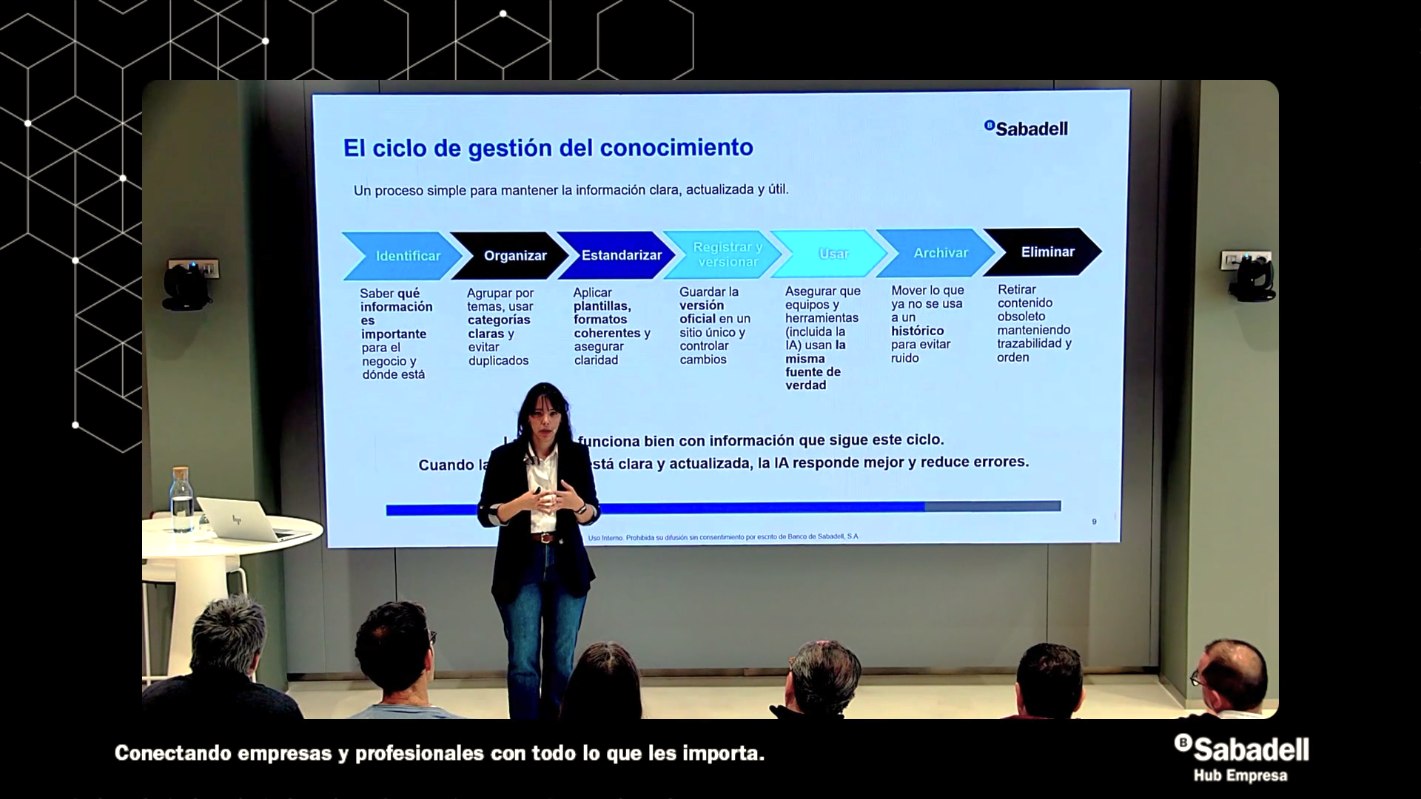
When information isn’t ready, AI fails
During the session, it was highlighted that when information is unclear or poorly organized, AI models can provide incoherent, incomplete, or even incorrect answers. Technology tends to mix versions, invent plausible responses, or reinforce existing inconsistencies.
Therefore, before implementing virtual assistants, automations, or conversational agents, it is essential to prepare the ground: review, organize, and prioritize the information that truly adds value to the business.
What it means for a document to be AI-ready
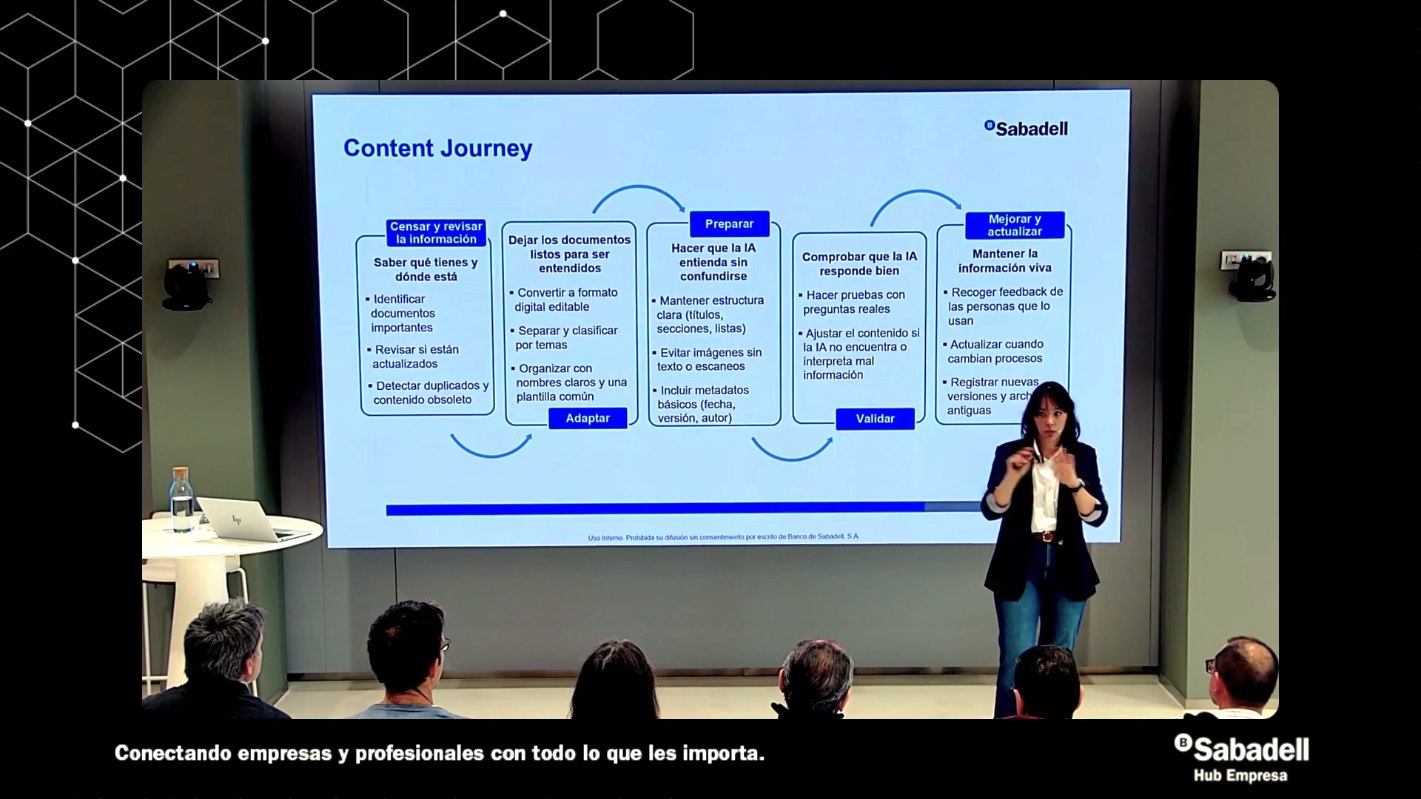
One of the most practical takeaways was that it is not necessary to make all company documentation “AI-Ready.” The key is identifying the most consulted and critical documents, such as rates, policies, procedures, recurring templates, or key operational content.
An AI-ready document doesn’t require advanced technology, but structural clarity:
- Editable and well-organized format
- Clear titles and sections
- Direct, unambiguous language
- Consistent naming
- Basic metadata
- No visual noise
By working on just 10–15 key documents, companies can see immediate improvements in AI response quality and a significant reduction in errors.
Small changes that generate big improvements
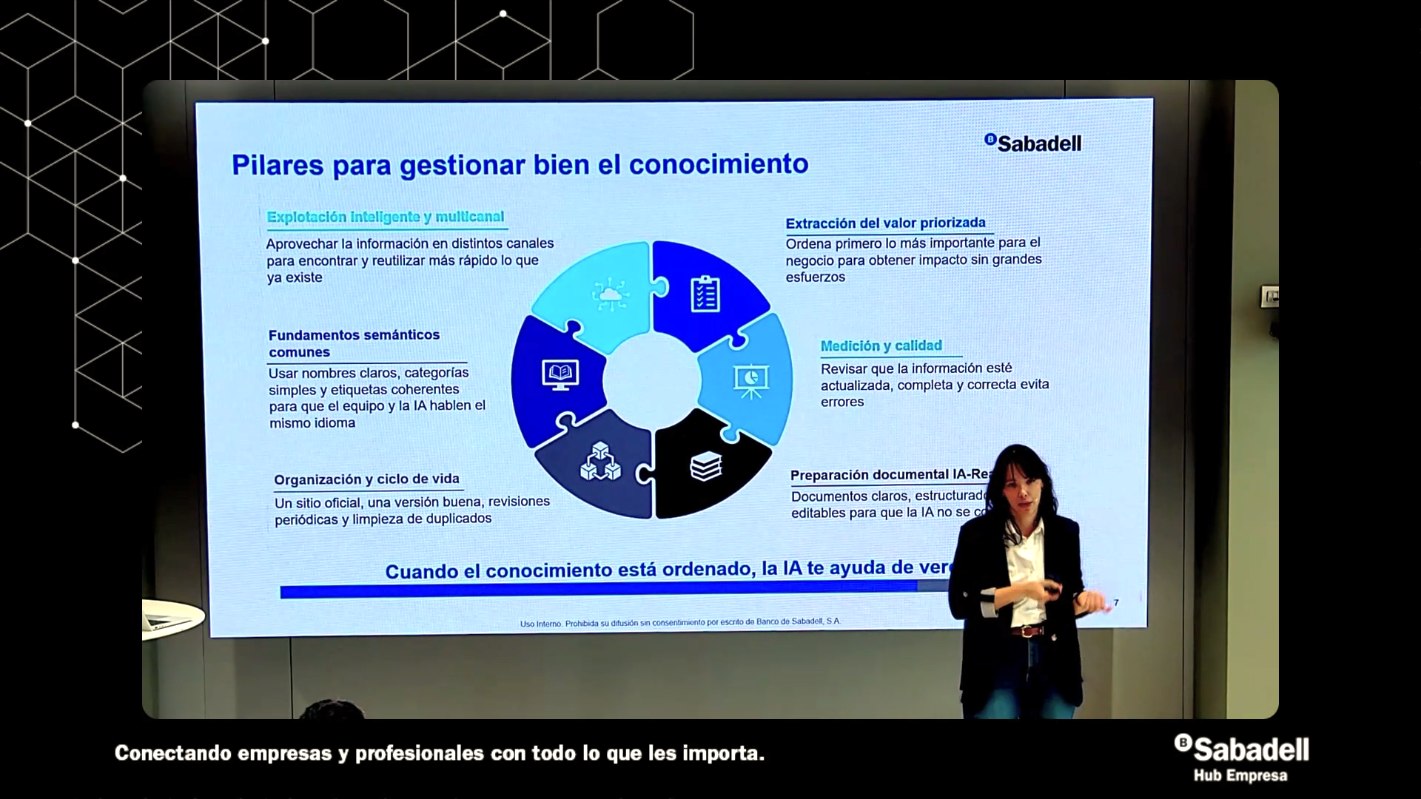
Another key message from Beatriz Tapias was that small adjustments in knowledge organization have a direct impact on productivity. When information is organized and accessible, AI responds better, dependencies on key people decrease, and decision-making accelerates.
Moreover, good knowledge management helps minimize risks, avoid rework, and save time on unnecessary searches, laying the foundation for a more efficient and scalable AI adoption.
Our approach: turning scattered content into useful knowledge
At Sabadell Digital, following Beatriz Tapias’ recommendations, we believe AI works best when integrated thoughtfully, responsibly, and on a solid knowledge base. As highlighted in the session, the goal is not to accumulate technology, but to transform scattered content into useful and actionable knowledge.
When companies organize their information, AI becomes a true accelerator, capable of improving efficiency, reducing errors, and enabling faster, better-informed decisions.
Preparing today’s knowledge for tomorrow’s AI
The session at Hub Empresa Valencia reinforces our vision: AI doesn’t start with algorithms—it starts with people and how they manage knowledge.
Preparing information well today is the best way to ensure tomorrow’s AI projects have real impact, are sustainable, and aligned with business needs. With this approach, companies can prepare their knowledge today so AI drives smarter, more efficient decisions tomorrow.
We keep moving forward!