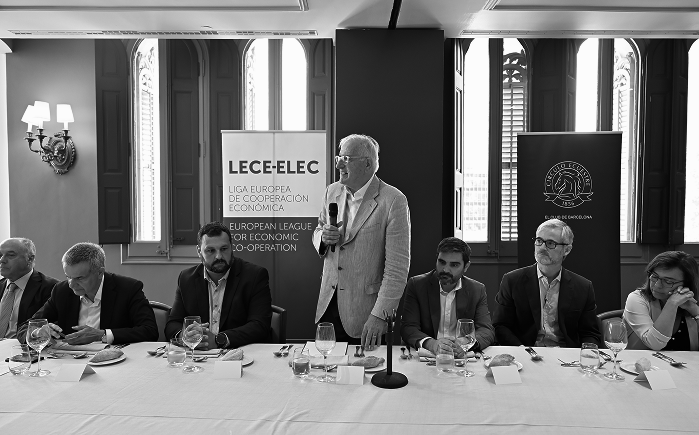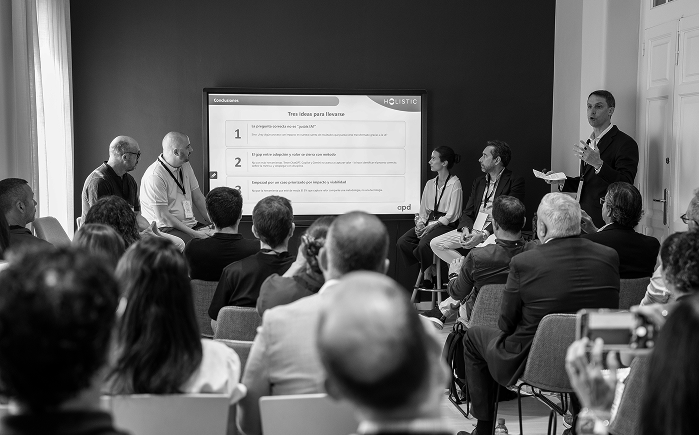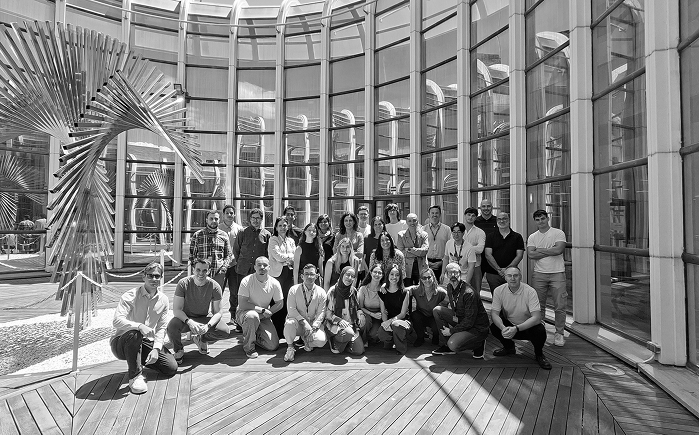

A few weeks ago, I had the opportunity to take part in a round-table discussion organised by La Vanguardia on technological sovereignty, artificial intelligence and digital resilience.
During the discussion, we exchanged different perspectives among representatives from a range of sectors, and one conclusion kept coming up: technology has become such a strategic factor that it is no longer enough to ask ourselves which tools we use; we must also ask how much control we have over them.
Traditionally, when I heard people talk about technological sovereignty, I tended to associate it strictly with the physical location of data or dependence on specific providers. I now believe the concept is much broader: technological sovereignty means maintaining the ability to make decisions. Deciding where we run our services, how we protect our information, how we ensure business continuity and how we prevent a decision made today from limiting our ability to act in five or ten years’ time. And this is particularly important in the financial sector.
Technology: An Essential Asset for the Financial Business
One of the most profound changes I have experienced throughout my professional career is seeing how technology has evolved from being a support function to becoming an essential part of the business itself. Today, a customer can open an account from their mobile, take out a product, make an international transfer, apply for financing or interact with the bank without visiting a branch.
This means that our digital platforms, infrastructure and data are strategic assets. And when something is strategic, maintaining the ability to control it becomes a priority.
That is why, when we drive digital transformation initiatives such as NewApp at Banco Sabadell, we are not simply thinking about delivering a better user experience. We are thinking about building technological capabilities that allow us to evolve quickly, scale when necessary and maintain the levels of security and availability our customers expect.
The New Paradigm of Operational Resilience
Years ago, when we talked about business continuity, the conversation revolved around data centres: what happens if a data centre becomes unavailable? How long will it take us to recover? Do we have an adequate replica? Today, the questions are much more complex.
- Security: What happens if we suffer a ransomware attack?
- Ecosystem: What happens if a critical third party or essential provider becomes unavailable?
- Complexity: How do we recover hundreds of digital services in a hybrid environment where traditional technologies, cloud and SaaS solutions coexist?
Technological sovereignty is increasingly measured by our ability to recover in the face of adversity. For this reason, we are driving initiatives aimed at strengthening our capabilities to restore critical environments, including architectures that enable us to maintain more isolated, protected and independent copies in extreme scenarios. When we analyse a technological architecture today, above all, we ask ourselves how it will respond when something goes wrong.
The Cloud Is Not the Problem; Dependency Is
Technological sovereignty is often framed as a debate between cloud and on-premise. It is often presented as though one were more modern than the other, although I personally believe this is an excessive simplification. The cloud offers extraordinary capabilities in terms of scalability, innovation and speed. It would be unreasonable to give them up. The relevant question is a different one: how can we make the most of these capabilities without creating dependencies that could limit our future options?
At Banco Sabadell, we are committed to a balanced approach based on hybrid architectures. Certain capabilities benefit enormously from the elasticity of the public cloud. Others require additional levels of control, resilience or proximity to the data. The key is to retain the ability to choose. True sovereignty does not mean building everything ourselves, but being able to decide at any given moment which is the best option for the organisation.
Artificial Intelligence Opens Up New Opportunities and Responsibilities
If there is one technology accelerating this debate, it is undoubtedly artificial intelligence. Over the past few months, I have taken part in numerous conversations about AI. Some focus on productivity, others on operational efficiency and others on new services for customers. But they all ultimately arrive at the same point: how do we deploy these capabilities safely and responsibly?
The real question is how we protect data, how we govern models, how we ensure regulatory compliance and how we avoid becoming mere consumers of external capabilities without developing our own expertise.
That is why I believe technological sovereignty and artificial intelligence must move forward together.
People Are the Most Important Asset
During the La Vanguardia event, there was a great deal of discussion about platforms, infrastructure, regulation and data. But I believe we should have spent more time on the most important element: people. Because no technology strategy will be truly sovereign if the most critical knowledge resides entirely outside the organisation.
The most ambitious projects we are undertaking — from modernising our digital platforms to adopting AI capabilities and strengthening operational resilience — are only possible thanks to the talent we have within Banco Sabadell.
Looking to the Future
I am convinced that we will continue to see extraordinary technological advances over the coming years. Artificial intelligence, automation, more advanced cloud capabilities and new digital platforms will continue to transform the way we operate. Our challenge will not be deciding whether to adopt these technologies, but doing so while maintaining our ability to make decisions, our resilience and our knowledge.
Because, ultimately, technological sovereignty means preserving the freedom to choose our own technological path.